Friday, June 26, 2009

[tech4all] Override right click protection and save images in websites


Override right click protection and save images in websites


Some websites disable right click and drag/drop on certain images to prevent users from saving them.
Its very inconvenient for those who want to save a local copy of some images/photos.


In Firefox this can be done by ,
1. Tools -> Page Info
2.Select the Media Tab, all images on the page will be listed with adress at top and preview at bottom.
3.Press the "Save as" button above the preview pane and save the image.
Interestingly, a similar process can be also done using IE 8, Internet explorer 8 has some interesting developer tools.


In IE 8,
1.Press F12 or select T00ls-> Developer Tools
2.On the developer tools window, select the menu Images ->View Image report
3.A report of all the images and their attributes along with preview open in a new tab in IE.
4.Right click and save the image required.


Cricket on your mind? Visit the ultimate cricket website. Enter now!

__._,_.___
Recent Activity
Visit Your Group
Give Back

Yahoo! for Good

Get inspired

by a good cause.

Y! Toolbar

Get it Free!

easy 1-click access

to your groups.

Yahoo! Groups

Start a group

in 3 easy steps.

Connect with others.

.

__,_._,___

[tech4all] Apple's ipod 3.0 firmware unlocks bluetooth for 9.95USD


Apple's ipod 3.0 firmware unlocks bluetooth for 9.95USD

Apple released the iphone/ipod firmware 3.0 version recently.
The catch for ipod touch users is that this firmware upgrade is that it activates(unlocks) the bluetooth chip in ipod touch.Ever since it was released,there was no bluetooth option in ipod touch,but it had an option to connect with Nike gadgets.
The chip that was used for Nike is now being unlocked to provide bluetooth access to ipod touch,enabling multiplayer games,wireless headphones etc.
But, there is a catch here too, the firmware upgrade is not available for free.
It needs to be purchased for 9.95$ (USD). (file size 257.8MB)
Normally, it is the duty of the vendor to provide firmware updates for free.
Imagine Nokia selling its phone's firmware updates,or Microsoft selling service packs!
Apple has monopoly in this segment since they are the leaders.

And then, there is this problem of Apple bundling stuff.
Quick time is bundled with itunes.Why cant Apple integrate quicktimes' codecs into itunes itself?
I have itunes 8.1 and its been bugging me to upgrade to itunes 8.2,but i declined the upgrade. So, what Apple did was to bundle the ipod touch 3.0 firmware with itunes 8.2!I need to upgrade to itunes 8.2 in order to upgrade to 3.0 firmware which i bought for 10USD.

All in all, the bluetooth unlocking is too good to resist.
The upgrades in 3.0 include,

Stereo Bluetooth


Multiplayer peer-2-peer gaming


Landscape mode typing in Safari,Notes etc


Cut/Copy/Paste
 
http://www.bharathtech.com/2009/06/apples-ipod-30-firmware-unlocks.html


Cricket on your mind? Visit the ultimate cricket website. Enter now!

__._,_.___
Recent Activity
Visit Your Group
Sitebuilder

Build a web site

quickly & easily

with Sitebuilder.

Need traffic?

Drive customers

With search ads

on Yahoo!

Support Group

Lose lbs together

Share your weight-

loss successes.

.

__,_._,___

Thursday, June 25, 2009

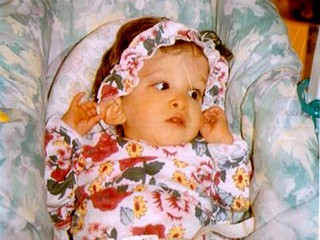
[tech4all] Girl who does not age


Doctors Baffled, Intrigued by Girl Who Doesn't Age

Years Pass, but Brooke Greenberg Remains a Toddler. No One Can Explain How or Why.

In a recent paper for the journal "Mechanisms of Ageing and Development," Walker and his co-authors, who include Pakula and All Children's Hospital (St. Petersburg, Fla.) geneticist Maxine Sutcliffe chronicled a baffling range of inconsistencies in Brooke's aging process. She still has baby teeth at 16, for instance. And her bone age is estimated to be more like 10 years old.
"There've been very minimal changes in Brooke's brain," Walker said. "Various parts of her body, rather than all being at the same stage, seem to be disconnected."
Brooke's mother, Melanie Greenberg, 48, sees a different picture. "She loves to shop," Greenberg said. "Just like a woman."
Brooke rides in a stroller while her mom shops for clothes in the infant sections of department stores near their home in a Baltimore suburb. That Brooke is in her mid-teens is so mind-boggling that if another mother with a toddler asks Greenberg how old Brooke is, she usually doesn't try to explain.
"My system always has been to turn years into months," Greenberg said. "So, if someone asked today, I might say, she's 16 months old."
 

The Toddler Who Rebels Like a Teen

Brooke weighs 16 pounds and is 30 inches tall. She doesn't speak, but she laughs when she is happy, and she clearly recognizes the people around her. She has three sisters: Emily, 22; Caitlin, 19; and Carly, 13. All three are bright, active and of normal size and development. They say that Brooke has ways of expressing herself like the teenager she is.
"She looks like a 6-month-old, but she kind of has a personality of a 16-year-old," Caitlin said. "Sometimes we joke about how she rebels."
Brooke will resist and refuse activities that don't appeal to her by vocalizing her displeasure, not with words, but with sounds typical of an infant. "She makes it known what she likes and what she doesn't like," sister Emily said.
Carly said it no longer seems strange to have an older sister who is still essentially an infant. "As I got older, she was just like another little sister to me," she said.
In her first six years, Brooke went through a series of medical emergencies from which she recovered, often without explanation. She survived surgery for seven perforated stomach ulcers. She suffered a brain seizure followed by what was diagnosed as a stroke that weeks later left no apparent damage.
At 4, she fell into a lethargy that caused her to sleep for 14 days. Then, doctors diagnosed a brain tumor, and the Greenbergs bought a casket for her.
"We were preparing for our child to die," Howard Greenberg said. "We were saying goodbye. And, then, we got a call that there was some change; that Brooke had opened her eyes and she was fine. There was no tumor. She overcomes every obstacle that is thrown her way."
Brooke's doctor said the source of her sudden illnesses remains a mystery.
"We often did not have a good explanation for why she became ill as quickly and intensely as she did," Pakula said. "There were many times in which there were real doubts about her ability to survive."
As she rocks back and forth in a baby swing, Brooke is fed through a tube inserted into her stomach, because her esophagus is so small that swallowed food could back up into her lungs and cause pneumonia.
Doctors recommended growth hormone therapy early in Brooke's life, but the treatment produced no results.
Howard Greenberg recalled the follow-up visit to the endocrinologist. "We took her back in six months, and the doctor looked at us and said, 'Why didn't you give Brooke the growth hormones?' And I said, 'We gave Brooke the growth hormones. We gave her everything you told us to do.' And Brooke didn't put on a pound, an ounce; she didn't grow an inch."
 

Part of the Family

Brooke's hair and her nails are the only two things that grow, Howard said. "She has pajamas and outfits that are 10 or 12 years old," he said.
One of the things she loves most is movement. As Brooke lies on her stomach, Carly often steers her through the house on an ottoman. Brooke also likes to push against open kitchen drawers until they slam shut.
In her crib, "she's very content," Howard said. "She has very little conception of time."
The family has placed a small television near the crib so she can watch whenever she pleases. Her father gets up in the middle of each night to check on her.
 
Brooke has a caretaker during daytime hours, but the family's schedule revolves around her, year after year. The Greenbergs take no vacations, have few nights out and involve Brooke in as many family activities as possible. "To go to a swimming pool for the summer, or belong to a summer club ... we tried all those things, and it's lacking something," her mother said. "Brooke's not there. We're not a family without Brooke."
Brooke goes to a Baltimore County public school, Ridge Ruxton, dedicated to special education. Based on her age, she would be a junior in high school. Jewel Adiele, one of Brooke's teachers, said she wonders sometimes what Brooke is thinking or perceiving.
 
"People who have worked with her in the past or who briefly see her say ... there's no change," Adiele said. "But I think, in her heart, she changes. I think from day to day, there are changes. They're not just as visible as you see in a lot of teens."
To try to determine why Brooke's aging process has been so irregular -- and what it means to the understanding of our genetic makeup -- Walker and Sutcliffe have studied samples of Brooke's cells and DNA to look for what they think may be a genetic mutation never seen before that has affected the way she ages.
Walker, of the University of South Florida, believes that if the gene can be isolated, it may provide clues to questions about why we age and die.
"Without being sensational, I'd say this is an opportunity for us to answer the question, why we're mortal, or at least to test it," Walker said. "And if we're wrong, we can discard it. But if we're right, we've got the golden ring."
 

A Key to Understanding How We Age?

If the gene -- or complex of genes -- is identified, Walker plans to test laboratory animals to determine whether the gene can be switched off and, if so, whether it will cause the animal's aging to slow.
In the long term, the idea that the aging process might somehow be manipulated raises serious questions about what human beings might do with that knowledge.
 
"Clearly, that's the science fiction aspect of it," said Walker, describing the social and ethical dilemmas that would arise. "We can't have continued reproduction and people who don't age."
One possible reason to slow the aging process, Walker suggested, would be to allow astronauts to travel in space for long periods of time. "But right now, it's only conjecture," he said.
Neither Walker nor Pakula, her doctor, can speculate how long Brooke's life might be. "That's more of a crystal ball question," Pakula said. "I think there's no way of knowing. "
 
The visual evidence of that unpredictable future is always there in the family pictures -- photographs in which everyone but Brooke is aging.
The Greenbergs are fascinated by the promise that a scientific breakthrough may stem from Brooke, whose own life is governed by the most basic elements: food and shelter; a family's love; and their ability to see in her far more than meets the eye, having come to terms with the prospect that she will never grow up.
"We love her just the way she is," Melanie Greenberg said. "We don't want to change her."
Added Howard Greenberg, "Brooke is the nucleus of our family. What if Brooke holds the secret to aging? We'd like to find out. We'd like to help people. Everybody's here for a reason. Maybe this is why Brooke is here."


Cricket on your mind? Visit the ultimate cricket website. Enter now!

__._,_.___
Recent Activity
Visit Your Group
Search Ads

Get new customers.

List your web site

in Yahoo! Search.

Share Photos

Put your favorite

photos and

more online.

Yahoo! Groups

Dog Lovers Group

Connect and share with

dog owners like you

.

__,_._,___

[tech4all] Fw: Bank currency around the world


Bank currency around the world


Argentina

Click here to join nidokidos


Australia 

Click here to join nidokidos


Azerbaijan 

Click here to join nidokidos


Central African Republic(CAR) 

Click here to join nidokidos


Belgium 

Click here to join nidokidos


Myanmar 

Click here to join nidokidos


Canada 

Click here to join nidokidos


Mexico 

Click here to join nidokidos


Tajikistan 

Click here to join nidokidos


Denmark 

Click here to join nidokidos


USA 

Click here to join nidokidos


Caribbean Islands 

Click here to join nidokidos


Egypt 

Click here to join nidokidos


Click here to join nidokidos


Estonia 

Click here to join nidokidos


Euro 

Click here to join nidokidos


Click here to join nidokidos


China 

Click here to join nidokidos


Islamic Republic of Iran 

Click here to join nidokidos


South Korea 

Click here to join nidokidos


Mexico 

Click here to join nidokidos


Mongolia 

Click here to join nidokidos


Norway 

Click here to join nidokidos 


Pakistan 

Click here to join nidokidos


Peru 

Click here to join nidokidos


England

Click here to join nidokidos


Russia
 

Click here to join nidokidos


Russia

Click here to join nidokidos


UAE 

Click here to join nidokidos


.


Love Cricket? Check out live scores, photos, video highlights and more. Click here.

Monday, June 22, 2009

[tech4all] Instant Expert: Cancer


Instant Expert: Cancer

Cancer is a group of over one hundred diseases, all of which share the common feature of uncontrolled spreading of malignant cells in the body (Image: Science Source / Science Photo Library)

Cancer is a group of over one hundred diseases, all of which share the common feature of uncontrolled spreading of malignant cells in the body (Image: Science Source / Science Photo Library)


One in three of us will get cancer at some point in our lives. Once so feared its name was whispered, the disease is no longer an inevitable death sentence. Today, almost two-thirds of those who develop cancer will still be alive five years later, compared with just half in the 1970s.

Cancer has turned out to be tougher to crack than everyone hoped when US President Richard Nixon launched the War on Cancer in 1971. But death rates are falling, thanks to earlier detection of tumours and improved use of existing treatments - mainly chemotherapy and radiotherapy. The success has been biggest for children: since the mid-1970s, death rates from cancers of childhood have halved. Of those with the most common childhood cancer, acute lymphocytic leukaemia, 85% are still alive five years later, compared with just 53% in the 1970s.

Inner workings

A key reason why cancer patients are living longer, is that scientists now understand more clearly what happens when cells turn cancerous. Cancer begins when genes which normally control cell division, growth and repair are damaged through mutation. These genes can then cause cells to grow and divide uncontrollably, destroying neighbouring healthy cells. For example, agene called p53, which normally acts as a brake on cell division, turns out to be mutated or lost in about half of all tumours. Another proto-oncogeneMycnormally helps healthy cell division, but can become an oncogene if damaged, causing cells to divide unchecked.

Mutations can arise by chance errors in DNA replication, and genes can also be damaged by carcinogens - such as tobacco chemicalsbenzene, possiblyacrylamide and some food additives - or ultraviolet light from sunshine. Certainviruses can also trigger gene mutations, such as the human papilloma virus that can cause cervical cancer.

Some mutated genes are inherited: two examples are BRCA1 and BRCA2, which together account for about 5% of all breast cancer cases. Other genessuch as DBC2EMSY and FA have been implicated in ovarian, breast and lung cancer.

Once a cell has turned cancerous, it divides until a mass of cells forms a tumour. Diagnostic tests can quickly distinguish between malignant, or cancerous, tumours and those that are benign, or harmless. As a malignant tumour progresses, cells or clumps of cells break off and spread, or metastasise, around the body via the lymphatic system and blood vessels.

The latest generation of treatments exploit our knowledge of what happens within cancerous cells. These target proteins and messenger chemicals - such as growth factors or enzymes - that the errant cells need to survive and grow.

Glivec (or Gleevec), for example, targets abnormal proteins that help cancerous cells to grow. Dubbed the first "magic bullet" for cancer, it is used to treat one type of leukaemia and a rare cancer of the gut. Another drug17AAG, targets cancer cells by suppressing Hsp90 - a protein vital for their growth. The drug is undergoing trials to treat melanoma and other cancers that affect the prostate, kidney and breast.

An alternative approach is to persuade the immune system to attack tumours, using vaccines, biological therapies such as alpha interferon or interleukin 2 andgenetically altered white blood cells. In the future, scientists hope to targetstem-cell-like cells within cancers that may be responsible for most of the growth of some tumours, and evade existing drugs. They also plan to use nano-drugsnano-bullets and "smart bombs" to deliver molecules with pinpoint precision to tumour cells.

Even soil-living or flesh-eating bacteria, engineered virusesweed extracts,microwaves, chemicals from Antarctic sea squirts and the immune cells of siblings have been recruited to destroy tumours.

Prevalence Patterns

In developed countries, the cancer most likely to afflict you is non-melanomaskin cancer, often caused by the Sun's harmful ultraviolet rays. This is usually treated and cured. Melanoma, a deadlier skin cancer, is less common but isincreasing by around 3% a year in the US. Though UV light is the cause of many skin cancers, there is some evidence that small amounts may also help prevent other cancers. In the developing world the most common cancers are linked to infectious agents, such as cervical cancer or liver cancer, caused by hepatitis B.

The biggest killer in industrialised nations remains lung cancer. For men, lung cancer mortality has been falling since 1990, mirroring a peak in popularity of smoking during the 1960s. For women, who commonly took up smoking later, lung cancer mortality is still rising. Tobacco is also rapidly becoming the leading cause of cancer in Asia.

Breast cancer accounts for almost one in three of all cancers diagnosed in women each year. For men, prostate cancer is just as common, with the highest rates in African American men and Caribbean men of African origin.

Screening for both of these diseases has improved sharply. Early breast tumours show up on a mammogram long before they can be felt as a lump. More women now survive the disease - three-quarters of women whose breast cancer was diagnosed 10 years ago are still alive today. Similarly, a prostate-specific antigen (PSA) test has revolutionised early diagnosis for this cancer in the US. Some experts argue that screening can be harmful, however.

Factoring in risk

Dozens of factors affect an individual's risk of getting cancer. Smoking is the biggest single risk factor - with tobacco linked to about a third of all cancers.

Another clearly established risk factor is exposure to ionising radiation. This may be responsible for cancers in people living around Chernobyl in Ukraine,Toikamura in Japan and for people working in nuclear power plantsRadiationmay also have led to a high incidence of cancer in those who witnessed early nuclear tests or have been in contact with depleted uranium munitions, though a recent study contests this risk.

Risk factors for developing breast cancer include: being childless or delaying childbearing until aged over 30, starting periods early, using hormone replacement therapy, being exposed to oestrogen-like chemicals, and drinking one or more units of alcohol daily. More than one risk factor is usually needed before cancer cells develop.

Risks posed by living near overhead power lines or petrol stops, or usingcellphones, are less clear.

Preventative steps

If everyone stopped smoking, cancer deaths could be cut by one-third, researchers estimate. Moves to protect people from passive smoking, in bars for example, are gaining ground in many industrialised countries.

Staying out of sunlight and using strong sunscreens could prevent hundreds of thousands of us from developing skin cancer worldwide annually. Foods rich inantioxidants and beneficial fatty acids such as omega-3 and oleic acid found inolive oil - a key ingredient of the healthy Mediterranean diet - seem to protect against some cancers, although the findings are mixed.

Doctors can increasingly intervene directly to prevent cancers. For example,vaccines against hepatitis B could soon cut deaths from liver cancer. There are also preventive therapies - such as tamoxifen or the trial drug anastrazole - thatinterfere with the production of the hormone oestrogen, implicated in many breast cancers. Doctors believe that it could halve the rates of breast cancer in women with a family history of the disease.

All this means that, while hopes of total cure for cancer are still unrealistic, the disease is increasingly under control.

Src: http://www.newscientist.com/article/dn9957-instant-expert-cancer.html?full=true


Love Cricket? Check out live scores, photos, video highlights and more. Click here.

__._,_.___
Recent Activity
Visit Your Group
Give Back

Yahoo! for Good

Get inspired

by a good cause.

Y! Toolbar

Get it Free!

easy 1-click access

to your groups.

Yahoo! Groups

Start a group

in 3 easy steps.

Connect with others.

.

__,_._,___